
Part 1 of 4 · Manufactured Homes on Land
Before you buy the land — 15 things to check first.
Five acres. Mountain views. No neighbors behind you, and a price that looks like a bargain next to a finished house. It might be one. But owning land does not mean you can build on it, so here's what I want answered before a client gets too far in.
Work backward
Most people start this project at the fun end. They start browsing floor plans, picking islands and pantries, deciding whether they want the big soaking tub. I understand the appeal. It's the part that feels like the dream.
But the question that decides whether this works isn't which home do I want. It's this: can I actually put the home I want on this piece of ground, and what will it cost to turn this dirt into a place a house can sit?
Answer that first and everything downstream gets easier. Skip it, and you can find yourself owning a beautiful parcel that needs $70,000 of work before a home can arrive — money that wasn't in the plan and often isn't in the loan.
Any dollar figures in this series are planning ranges to help you budget, not quotes. Every parcel and every jurisdiction is different. Verify with the city or county, the health department, the utilities, and your contractors.
The list
Fifteen questions, in roughly the order I'd ask them.
A verbal "you should be fine" from anybody is not what I want a buyer relying on when tens of thousands of dollars ride on the answer. Get it in writing wherever you can.
01
Is a manufactured home actually permitted there?
This one comes first, and it isn't a formality. Call the city or county planning office with the actual parcel number and ask what the zoning is, whether a single-family dwelling is allowed, whether a HUD-code manufactured home is allowed, and whether a modular home is treated differently. Ask about minimum square footage, roof pitch, exterior materials, garage requirements, skirting or perimeter enclosure, whether a permanent foundation is required, and what the setbacks are. Then ask the question most buyers never think of: is there a maximum age on a home being moved onto the property? Plenty of Utah jurisdictions won't allow an older home to be relocated in, and that rule can end a plan quietly.
02
Is it a legal building lot, and how much of it can you actually use?
Being a parcel with its own tax ID is not the same as being a legal building lot. Ask directly. Then subtract the setbacks, the easements, the drainage, the slopes, and the septic area, and look at what's left. Five acres can leave you a surprisingly small window where a home is actually allowed to sit.
03
What exactly is the legal access?
A road reaching the property does not mean you have the right to use it. Ask whether access is public, private, or by easement, and if it's an easement, whether it's recorded, how wide it is, and who maintains it. Then ask the harder version: can heavy equipment use it, and can a manufactured-home transporter use it? You aren't getting a pickup onto the site. You're getting home sections, concrete trucks, an excavator, and possibly a crane. Gates, bridges, tight corners, steep grades, mature trees, and low power lines all count.
04
In winter, is the road maintained?
This is the Utah footnote nobody puts in the listing. Some county and private roads out toward Levan, Mills, and the west side aren't plowed. A property that's easy in July can be genuinely hard in February, and delivery windows get scheduled in whatever month they get scheduled.
05
Does the land include water — and what does that mean exactly?
This is the biggest Utah-specific issue in the whole process. Water rights and land ownership are not the same thing. A water right can be owned separately from the land and can be conveyed away from it, which means buying the ground does not automatically mean you receive whatever water has historically been used there. So when a seller says it comes with water, ask what that sentence means. A paid-for municipal culinary connection? A connection that's available but not purchased? A private well? A shared well? An irrigation share with no culinary water? A water right on paper? Those are wildly different purchases at wildly different prices.
06
If you're planning a well, do you have the right to use the water?
You generally cannot buy land, hire a drilling rig, and start pumping. Utah requires a water right that allows the use. Some areas are open to new appropriation and others are restricted or closed, which can mean buying an existing right and filing a change application — a process measured in months, not days. The question to answer is whether this parcel supports the use you intend, not whether the neighbors have wells.
07
What could a well cost?
It depends on depth, geology, casing, pump size, electrical, treatment, access, and whether the first hole produces enough water. For planning purposes, complete residential well projects in Utah commonly land somewhere in the five-figure range, and deep or difficult wells go higher. Treat that as a budgeting range, never a quote. And keep the two things separate in your head: the well is the infrastructure, the water right is the legal permission. You may need both.
08
Is there sewer, and where is it really?
If the answer is yes, don't stop there. Where is the main? Is a lateral already stubbed to the property? Has the connection fee been paid, or are capacity and impact fees still due? How far does the home sit from the connection, who pays for trenching, do you have to cross a road, and does anything need to be pumped uphill? Available can mean ten feet away or four hundred feet down the road. Those are two different budgets.
09
If there's no sewer, can the property support septic?
Assume nothing here. A septic system typically needs a soil evaluation, health department approval, a designed system, setbacks from wells and property lines, adequate drain field area plus replacement area, and sometimes an engineered alternative system if the soils or groundwater don't cooperate. There are permit and site-evaluation fees before a contractor turns a shovel. A straightforward conventional installation is often a five-figure line; difficult soils, slopes, or engineered systems push it meaningfully higher.
10
Where is the electricity, physically?
Not near, not around here — where. At the road? Across the street? At the neighbor's corner? A quarter mile off? Utility line extensions are priced property by property, and trenching, conduit, vaults, easements, and rough terrain all add. Get an actual estimate rather than a reassurance.
11
Is natural gas available, and if not, what's the plan?
No gas isn't a deal breaker, but it is a decision. Propane means a tank, a pad, piping, install, and ongoing deliveries priced seasonally. All-electric means a heat pump, electric water heater, and an electrical service sized for it — which loops back to question ten.
12
What's under the grass?
Two parcels can look identical from the road and behave completely differently underground. Expansive or collapsible soils, high groundwater, rock, undocumented fill, steep slopes, drainage problems, wetlands, flood zones, and old dumping all show up out here. Depending on the jurisdiction and the project, you may need geotechnical or soils work — and what it finds affects your foundation, excavation, septic, driveway, grading, and eventually whether the house stays level.
13
What will it take to turn raw dirt into a home site?
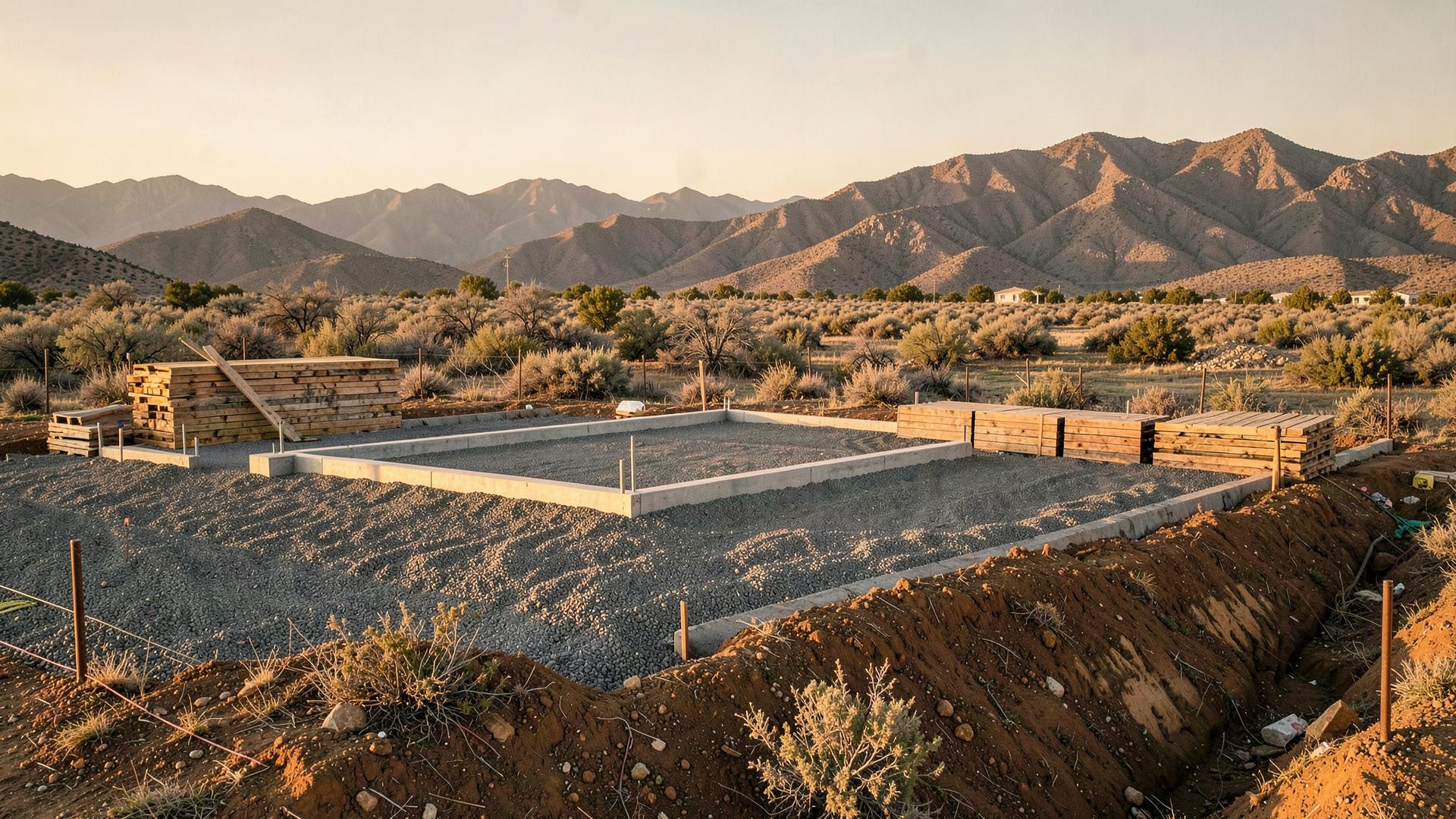
Clearing and grubbing, excavation, engineered fill, a compacted pad, retaining walls, drainage, culverts, the driveway, utility trenches, and foundation excavation. This is the line that looks small on a spreadsheet and gets enormous on hard land. A flat half acre in town with utilities at the curb is a completely different project from five acres on a hillside.
14
Is the driveway actually buildable — and can the home make the turn?
Go past there's room for a driveway. What grade will it run at, and does the fire district cap it? Is a turnaround required, and a minimum width? Do you need a culvert, road base, or asphalt? Who maintains it? And then the practical one: can a transporter physically make the corners with a home section on the trailer? The house still has to arrive.
15
Flood, drainage, and wildfire
A cheap parcel gets expensive fast when it needs elevation, drainage improvements, retaining structures, or fire-access upgrades. Manufactured homes in regulated flood areas also carry specific elevation and anchoring requirements. And wildfire ratings out in the rural districts affect what insurance will cost you — or whether it's readily available at all. Find all of this out before the home is ordered, not after.
16
What will the city or county actually charge?
Ask for a full fee estimate, not just the building permit. Depending on where you are the list can include plan review, water and sewer impact fees, transportation impact fees, parks and public-safety fees, the water meter, the sewer connection, electrical, mechanical, excavation and road-cut permits, and septic permits. Utah law treats impact fees separately from ordinary permit and hookup fees, which is exactly why you want the whole sheet instead of one number.
17
What does the land really cost once it's buildable?
This is the only number that matters. Say the parcel is $120,000. Add a well, septic, power, driveway and site work, foundation, permits and fees, and the engineering nobody warned you about, and that $120,000 parcel can represent well over $200,000 before the home is even set. Those figures are illustrative — your parcel writes its own. But the lesson holds: don't compare dirt prices. Compare finished-site prices.
The Summit Keys land checklist
Print this. Take it to the planning counter.
Only once these have answers would I be comfortable calculating what the project actually costs — which is exactly where part two picks up.
☐Is the parcel a legal, buildable lot?
☐What is the zoning?
☐Are HUD-code manufactured homes permitted?
☐Is there a maximum age on a relocated home?
☐What setbacks apply?
☐What building standards apply (foundation, roof pitch, siding, square footage)?
☐Is there legal, recorded access?
☐Can delivery and construction equipment physically reach the site?
☐Is the road maintained in winter?
☐Is culinary water connected?
☐If not, is a connection available, and has it been paid for?
☐If using a well, is there a valid water right?
☐Does that right cover the intended use?
☐Is sewer connected?
☐If not, can the property support septic?
☐Where is the nearest electrical service?
☐What will the line extension cost?
☐Is natural gas available? If not, propane or all-electric?
☐Has the property been evaluated for soils or geotechnical concerns?
☐Is it in a flood hazard area or a high wildfire district?
☐Are there easements?
☐Are there deed restrictions or CC&Rs?
☐What impact and connection fees apply?
☐What site work is required?
☐What will the driveway cost?
☐Is a survey needed?
☐What foundation is required?
☐What is my contingency budget?
Where this goes next
Don't compare dirt prices. Compare finished-site prices.
That's the whole idea. Two parcels at the same price can be $80,000 apart once they're ready for a house, and the cheaper sticker is frequently the more expensive project.
If you're looking at ground anywhere from Spanish Fork down through Payson, Santaquin, Mona, and Nephi, I'd rather help you investigate a property before you're committed to it than help you solve it after. Browse what's out there on land for sale in Juab County or homes with acreage near Nephi.
Questions people ask
The ones that come up every time.
Next in the series
Keep going before you make an offer.
Buying
What It Really Costs to Put a Manufactured Home on Land in Utah
Land plus home is not the project cost. The five buckets, the financing rules that decide your rate, appraisal risk, taxes and insurance, and a worked example.
Read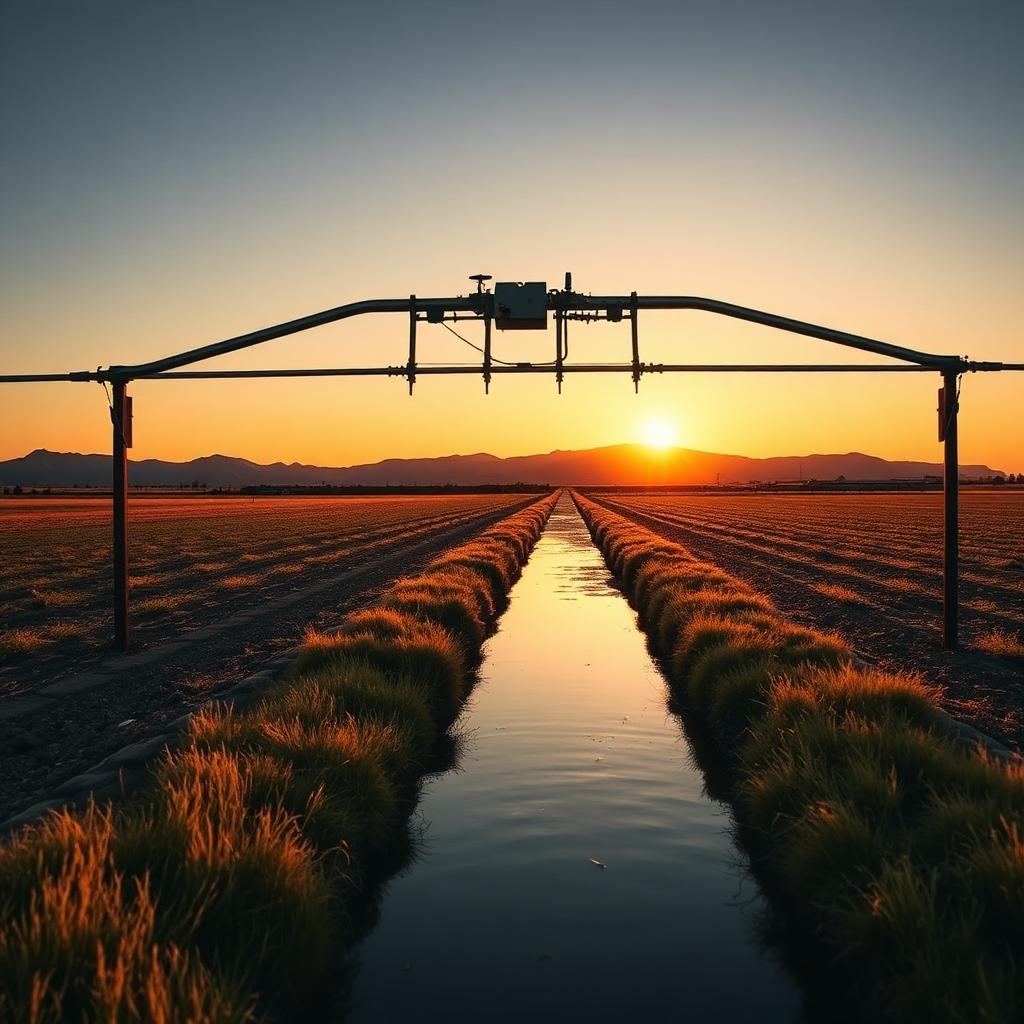
Resources
Utah Water Rights Explained — Deeded Rights, Water Shares, Wells, and What Actually Transfers With the Land
In Utah, water is public property — what you own is the right to divert and beneficially use it. A plain-English guide to deeded rights, appurtenant rights, water shares, culinary and secondary water, wells, and irrigation rights, with real examples for Juab and Utah County.
Read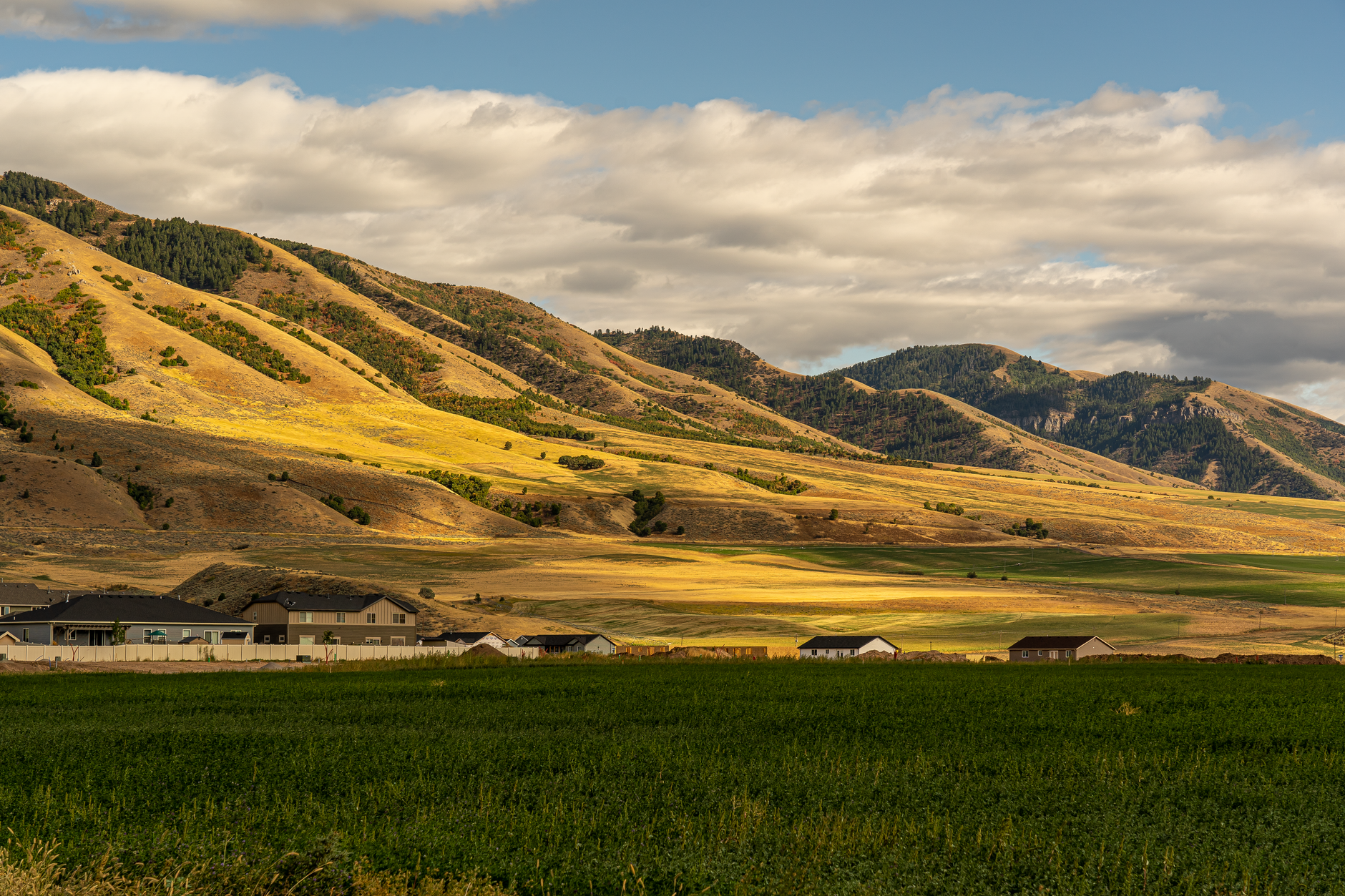
Buying
Buying a Home With a Septic System? What Rural Utah Buyers Need to Know First
A lot of homes in Mona, Levan, and rural Juab County run on septic systems instead of city sewer. Here's what to ask before you buy, why bedroom count matters, and what a septic inspection actually covers.
ReadThis guide is educational and is not engineering, legal, lending, water-rights, zoning, or construction advice. Requirements and costs vary substantially by property and jurisdiction. Verify independently with the applicable city or county, the Utah Division of Water Rights, the health department, utility providers, your lender, engineers, contractors, the manufacturer, retailer, installer, and title company. Dana Hoyt is a licensed Realtor® in Utah with Summit Keys Real Estate and Real Brokerage, LLC — The Perry Group. Reach out anytime.
- Why the dirt comes first
- The 15 checks
- The printable checklist
- Questions people ask
