
Buying · Utah County & Juab County
Struggling with where to live?Why new construction homes are getting a second look in Utah
The home you want, the neighborhood you love, and the payment you can afford don’t always exist in the same place. Here’s why new construction might change your search.
By Dana Hoyt · October 23, 2026 · 9 min read
You’ve probably been there.
You find a home online with a great kitchen, plenty of bedrooms, and a garage that could actually fit your vehicles. The price looks reasonable, too.
Then you notice the location.
It’s farther from work than you wanted. Or maybe the house is in the perfect neighborhood, but it needs a new roof, updated flooring, and a kitchen renovation.
Suddenly, choosing where to live feels like choosing what you’re willing to sacrifice.
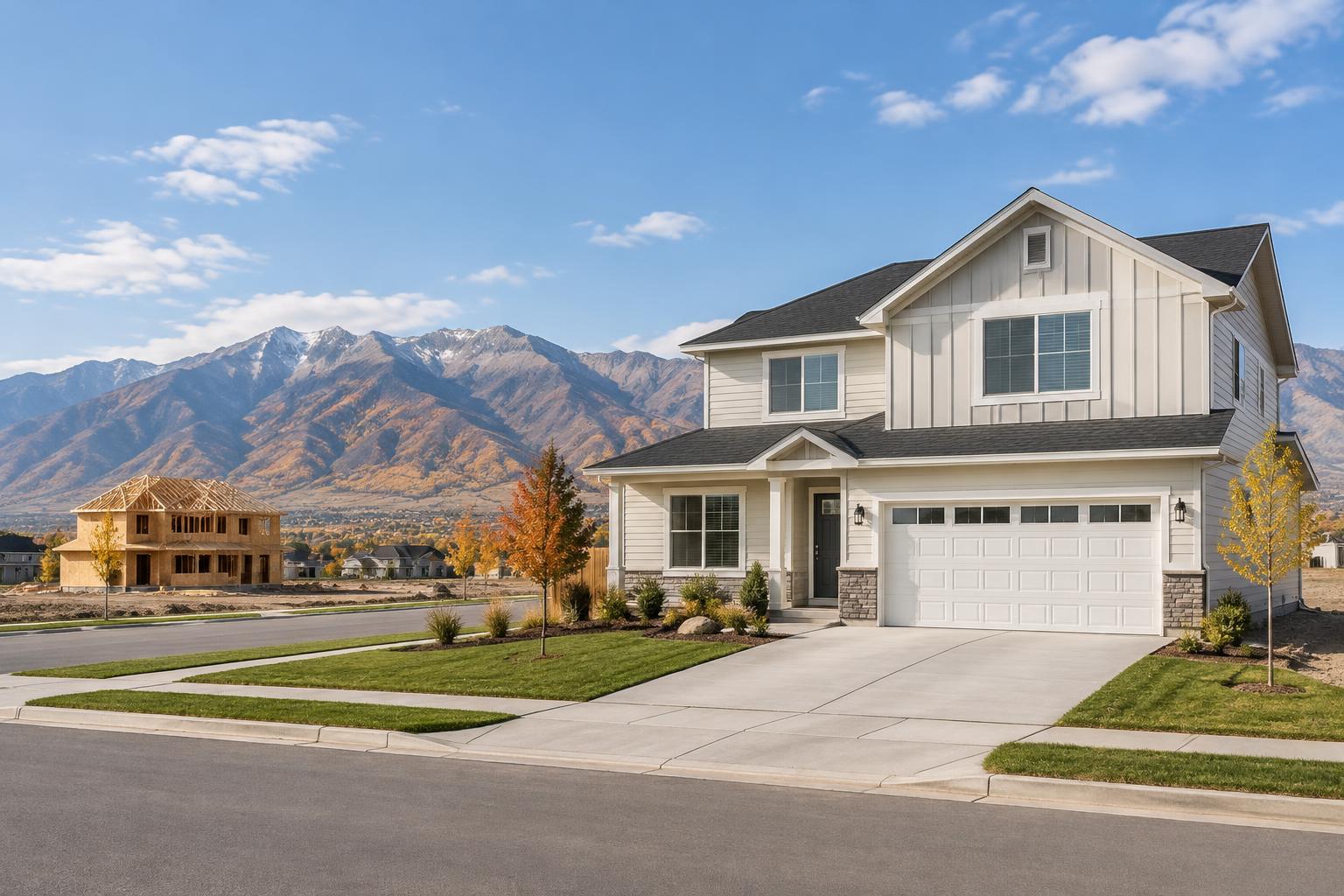
That’s one reason I think new construction deserves a closer look, especially for families searching throughout Utah County and Juab County.
But there’s something interesting happening in the housing market right now.
The national builder survey points to weak buyer traffic and widespread incentives. That is not a Utah sales-speed measurement, but it gives us a reason to ask what a builder is offering rather than assuming the advertised price tells the whole story.
1. Builders Are Offering Incentives That Existing Homeowners Often Can’t
One of the biggest reasons to consider new construction today isn’t the shiny countertops or fresh paint.
It’s the financing.
According to the National Association of Home Builders’ October report, released October 19, 2026:
- 65% of surveyed builders reported offering sales incentives.
- 43% reported reducing home prices.
- Among builders cutting prices, the average reduction was 6%.
These are national single-family builder survey figures, not Utah-specific statistics or a promise of what any particular Utah builder will offer. The 6% figure applies to builders reporting price cuts; it is not a discount on every new home.
Still, they tell us something important: builders are motivated to compete for buyers.
Incentives may include closing-cost assistance, permanent mortgage-rate reductions, temporary rate buydowns, or certain upgrades.
Think about what that could mean.
You might find an existing home with a lower asking price, but a newly built home with financing incentives could have a lower monthly payment.
Or the opposite could be true.
The question isn’t simply which house costs less. It’s which house makes the most financial sense after everything is included.
Here’s what that can look like on a $500,000 home.
Say you put 10% down ($50,000) and borrow $450,000 on a 30-year fixed loan. Principal and interest only:
- Typical mortgage at 6.5%: about $2,844 a month.
- Builder-incentive mortgage at 3.99%: about $2,146 a month.
- The difference: roughly $698 a month, or about $8,376 a year.
- Over the full 30 years: about $251,000 less in interest if the 3.99% rate is permanent and you keep the loan that long.
These numbers are an illustration I made for this article, not a quote. The 6.5% rate is an example, not today’s rate, and taxes, insurance, HOA dues, and mortgage insurance aren’t included. A 3.99% rate is usually a builder-paid buydown tied to a specific lender and specific homes, and it may come instead of a price cut or other credits. Run your own numbers in the Compare Two Loans calculator.
And remember, a temporary payment buydown eventually expires; it is not the same thing as a permanently lower note rate. Ask the lender for every payment step and the full payment after the subsidy ends. If you choose an adjustable-rate mortgage, ask separately how future rate changes and caps could affect the payment.
Request Loan Estimates from more than one lender, and compare the same loan features, cash needed at closing, and ongoing costs. A builder incentive may depend on using a preferred lender or meeting other conditions. Get those conditions in writing.
2. Families Are Looking for Homes That Fit How They Actually Live
One thing I notice when thinking about homes from a family’s perspective is that square footage doesn’t always tell the whole story.
A 2,500-square-foot house can feel spacious or cramped depending on how it’s designed.
Where do the kids drop their backpacks?
Is the laundry room anywhere near the bedrooms?
Can you see the backyard from the kitchen?
Is there enough garage space for bicycles, tools, and everything else that accumulates over the years?
Some newer floor plans are designed with modern living in mind. They may offer open kitchens, larger pantries, flexible rooms, convenient laundry spaces, and opportunities to finish a basement later.
That doesn’t mean every new home has a better layout. Some established homes offer bigger bedrooms, more storage, or features you can’t easily find in today’s developments.
But when you walk through a new build, you might discover that the house simply functions better for your everyday routine.
Sometimes that’s worth more than having an extra 300 square feet.
The question isn’t simply which house costs less. It’s which house makes the most financial sense after everything is included.
3. Buyers Want Fewer Expensive Surprises
Imagine buying a home and discovering that the furnace needs replacing during your first winter.
Or finding out the roof has only a few good years left.
Those expenses can turn what seemed like an affordable purchase into something considerably more expensive.
New construction can reduce the likelihood of certain immediate age-related repairs because major systems and materials are new.
Most newly built homes also come with some form of builder warranty, according to the Federal Trade Commission. Coverage is limited, and different components may have different coverage periods. Read the actual written warranty, exclusions, and claim process before closing.
However, new doesn’t mean problem-free, and a warranty doesn’t cover everything.
I would still recommend having a qualified independent inspector evaluate the home, even if the builder says it has passed municipal inspections.
For homes being built from the ground up, inspections at different construction stages may also be worth considering.
The real attraction is the potential for fewer near-term replacements, not a guarantee that maintenance costs will disappear.
4. New Developments Are Expanding Where Buyers Can Look
New neighborhoods can broaden your search, but I would check current listings and each builder’s actual inventory rather than assume a permit count tells us what is for sale.
The University of Utah’s Kem C. Gardner Policy Institute maintains the Ivory-Boyer Construction Database. Building-permit data measure authorized construction, not completed homes or homes currently available to buy. I could not substantiate the exact Utah County total in the original draft, so I’m not quoting it here.
For buyers considering communities such as Spanish Fork, Salem, Payson, Santaquin, Nephi, or Mona, it’s worth comparing newer neighborhoods with established ones.
But here’s where I think people should be careful.
Just because you can afford a bigger or newer house farther from work doesn’t automatically mean it’s the better place to live.
A longer commute means more time in the car.
A new development may have construction activity for years.
A neighborhood might not yet have mature landscaping, sidewalks throughout every phase, nearby shopping, or the same established amenities as an older area.
And if you’re hoping for a large yard, space for animals, a workshop, or room between neighbors, the typical new subdivision may not provide what you’re looking for.
Location still matters.
A home should work for the life you’re building, not just look attractive on moving day.
5. A Brand-New Home Might Not Cost What the Listing Says
This is one of the biggest things I encourage people to investigate.
You see a new home advertised at $450,000.
Great!
But what does that price actually include?
Is the basement finished? What about the backyard, fencing, sprinklers, appliances, window coverings, and garage-door opener?
Are the upgraded countertops shown in the model home standard?
Does the neighborhood have an HOA? If so, what does the fee cover?
You’ll also want an estimate of property taxes for the completed home, not just a tax bill reflecting a vacant lot or partial construction. In Utah, the county assessor values locally assessed property at fair market value as of January 1 each tax year. Ask the county assessor and your lender how the home’s construction status affects the estimate; don’t assume the current bill will be your long-term cost.
Depending on what is excluded, a newer home may require thousands of dollars in additional work after closing. The $450,000 above is an illustrative asking price, not a current local listing or quote. Get actual bids for unfinished items. An established home might already include those features.
It’s important to compare the finished cost of living in each property, not just the advertised purchase price.
A home should work for the life you’re building, not just look attractive on moving day.
6. New Construction Can Give You More Choices—But Also More Decisions
Depending on the builder and stage of construction, buyers may be able to select flooring, cabinets, colors, finishes, or other features.
For someone who has toured fifteen homes and disliked every kitchen, that can be appealing.
But customization can also cause the budget to creep higher.
An upgrade here. A different countertop there. A finished basement that wasn’t included in the original price.
Before you know it, you’ve spent considerably more than expected.
There’s also a difference between buying a completed inventory home and building one that won’t be ready for several months.
A move-in-ready property may offer more certainty about timing. A home still under construction can involve delays, design deadlines, and additional contract considerations.
Neither option is necessarily bad. You just need to understand what you’re agreeing to.
7. When an Older Home Might Actually Be the Better Choice
I don’t believe new construction is the answer for everybody.
In fact, some of the best opportunities may be in established neighborhoods.
An older home could give you a larger lot, mature shade trees, an established street, a finished basement, or more room to park an RV or trailer.
And there may be more flexibility when negotiating with an individual seller, depending on their circumstances.
For some families, having children ride bikes along a quiet, established street with mature trees is more important than owning the newest home in town.
For others, having a modern floor plan and fewer immediate repair projects matters more.
Neither family is wrong.
The important thing is knowing which priorities you would regret compromising.
8. So How Do You Decide Where to Live?
Before choosing between a new build and an existing home, I’d encourage you to answer a few questions.
1. What’s your actual monthly budget? Include the mortgage, taxes, insurance, HOA, utilities, and ongoing maintenance.
2. How much does location affect your daily life? Consider work, family, schools, shopping, and your routine.
3. How much work are you willing to take on? Would you prefer renovations, yard installation, or neither?
4. How important is outdoor space? Think about pets, children, gardening, privacy, parking, and future projects.
5. How long do you expect to stay? A home that works for the next three years may be different from one you hope to own for fifteen.
Once you’ve answered those questions, comparing houses becomes much easier.
You stop searching for the perfect home and start searching for the right combination of price, location, and lifestyle.
Put both offers on the same footing
What would each home actually cost you?
Start with the lender’s real quotes. In my calculators, “Compare Two Loans” lets you compare two properties and loan choices, including fixed-rate and adjustable-rate scenarios. Add taxes, insurance, mortgage insurance, and HOA costs instead of comparing only principal and interest.
The home comparison tool adds the everyday trade-offs: location, outdoor space, improvements, and how each home fits your priorities. Calculator defaults are examples, not today’s rates or a builder’s offer; a projected ARM payment is a scenario, not a guarantee.
These are rough numbers to help you get a good idea. Have a lender and the appropriate professionals check the assumptions before acting; reach out to me if you want help comparing.
My Take: Don’t Overlook New Construction, but Don’t Let It Distract You From What Matters
The October 2026 national builder report gives buyers a reason to compare carefully.
In that survey, many builders reported incentives and some reported price reductions. NAHB also described higher mortgage rates and affordability concerns weighing on national buyer traffic. That does not establish conditions in every Utah neighborhood.
That doesn’t mean every new construction home is a bargain.
It does mean buyers should consider comparing a builder’s offer against resale homes before making a decision.
A home that appeared outside your budget might become worth another look when you understand the financing.
Or you might discover that an existing home offers far more value after accounting for the lot, landscaping, basement, and location.
The goal isn’t to buy new. The goal is to buy wisely.
And when it comes to deciding where to live, I think that starts with understanding what your family needs today and what might matter five or ten years from now.
Let’s Compare Your Options
If you’re searching for a home anywhere from Spanish Fork to Nephi, I’d be happy to help you compare new construction and existing homes.
We can look at builder incentives, available floor plans, property features, monthly costs, and what life in each community might realistically look like.
No pressure to choose one type of home over another.
Just a better understanding of your options before you commit.
Sources and Fact-Check Notes
Checked October 23, 2026. These are dated references, not a live market valuation or a promise of available incentives.
- NAHB: October 2026 builder sentiment and incentives — October 19, 2026; national survey. Confirms 65% incentives, 43% price cuts, and 6% average reported cut.
- Gardner: Ivory-Boyer Construction Database — permit-data reference. The draft’s 6,733-unit Utah County total and single-family share were not verified and have been omitted.
- FTC: Warranties for New Homes — limited coverage, exclusions, and varying coverage periods.
- CFPB: Request and Review Multiple Loan Estimates — compare lender offers and loan features rather than only a quoted rate.
- Utah State Tax Commission: Locally Assessed Property — county assessment at fair market value as of January 1 each tax year.
Layout, commute, customization, repair, and yard examples are considerations to investigate for each property, not measured local trends or guarantees. Confirm prices, incentives, availability, completion dates, and contract terms directly with the builder and lender.
The goal isn’t to buy new. The goal is to buy wisely.
Let’s compare your optionsPrefer to call or text? (603) 915-6884
This article and the calculators give you a starting point, not a mortgage quote, appraisal, inspection, or professional advice. Have a lender confirm the financing, an inspector review the property, and the appropriate tax or legal professional review questions before you commit. Reach out to me for a second look at your options.
Share this post
Related posts
Keep reading

Buying
New Construction vs. Older Homes: Which One Is Right for You?
Same price, two very different homes. How to compare new construction against an existing home — what's included, what's not, and which one actually fits the way your family lives.
Read
Buying
New Construction in Utah: What Buyers Should Know Before Signing
Thinking about buying new construction in Utah? Here's an honest breakdown of builder incentives, rate buydowns, closing cost offers, inspections, and what a new home warranty usually covers — and does not.
Read
Buying
First Time Home Buyer Loans and Grants in Utah
Who Utah's homebuyer loans, grants, and local assistance programs help, who they exclude, and how to choose one that fits your life.
Read