
Land & property · Utah County and beyond
What if the right to build is worth something separate from the land?
Transferable development rights sound technical. The idea is surprisingly simple—and it can change what a buyer is getting or a seller is giving up.
7 min read UtahBy Dana Hoyt · September 27, 2026
The short answer
Your land and its development potential are not always the same thing.
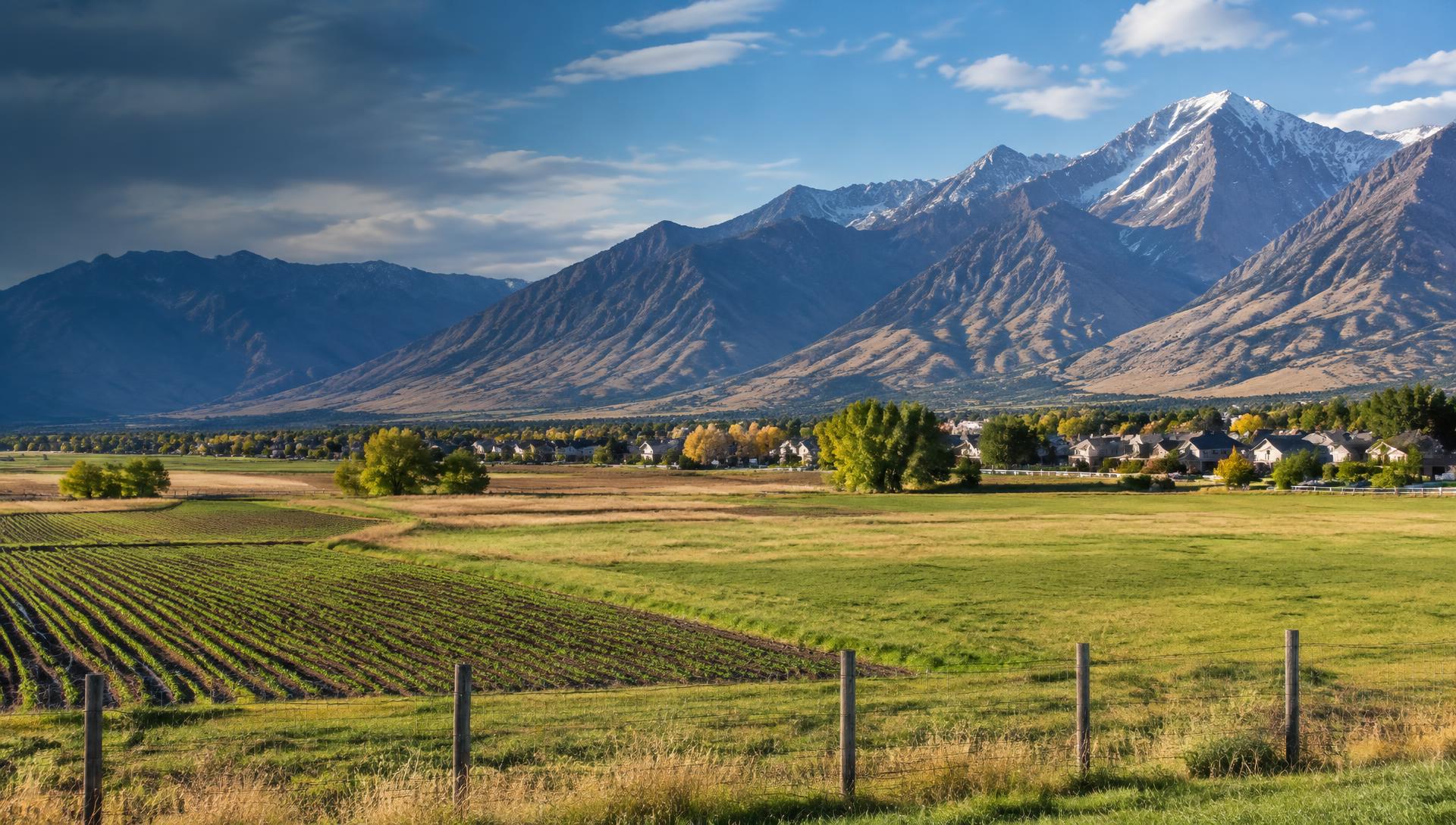
Imagine you own acreage near the edge of town. A buyer sees the fields, the views and maybe the possibility of future homes. But what if the right to build some of those homes could be transferred to a different property? In a place with an applicable transferable development rights program—usually shortened to TDR—that may be possible without selling the land itself.
That is the part I don't want landowners to miss. When you ask “What is my land worth?” the answer may depend on more than the dirt. And when you buy acreage, the buildable potential you picture may not be attached to it anymore.
The question isn't “Does this parcel look developable?” It's “Which rights actually come with it today?”
How it works
One property sends. Another receives.
Think of a development right as a permission to build a certain amount under a particular local program—not a portable building permit you can drop anywhere. A sending property gives up eligible development potential. A receiving property may use transferred rights for additional development, subject to that jurisdiction's rules and approvals.
Here's an illustration, not a statement of any city's current rules: a city decides it wants to protect certain open land while directing more housing toward an area with roads and services. A landowner in the sending area transfers an eligible right. A builder in the receiving area acquires it and seeks approval to build more than would otherwise be allowed there. The sending land may remain in the original owner's hands, but the transfer can leave lasting limits on future development of that land.
One TDR does not automatically equal one extra home. Transfer ratios, eligible sites, allowed uses, recording requirements and approvals differ. A right that exists on paper may not be usable for the project a builder has in mind.
For the seller
Before you price the property, find out what you own.
If you own acreage or development land, don't assume every possible lot is yours to sell—or that you must sell the entire parcel to realize any development value. First ask the city or county planning office whether a TDR program applies to your parcel, whether it is an eligible sending site, and whether any rights were ever issued, transferred, retired or used.
Then look for recorded restrictions and prior transfers in the title and land records. A sending area designation by itself is not proof of unused rights. If a transfer is possible, its price depends on whether eligible receiving sites and willing buyers exist, what additional development is actually permitted, and what costs or restrictions go with the deal. There is no universal “price per TDR.”
Before signing a land sale or a rights transfer, have the local planning office and a Utah land-use attorney help you understand exactly what remains with the property, what gets recorded against it and what a future buyer would inherit. A buyer may value land differently after rights have been severed.
For the buyer
Don't buy tomorrow's homes based on today's empty field.
If a listing says “development potential,” ask what that actually means. Has the property retained its development rights? Is it in a sending area, a receiving area, neither, or under a different set of land-use rules entirely? Has any restriction been recorded? What can be built without acquiring additional rights—and what would require a separate approval?
Buying a receiving property doesn't guarantee that you can simply purchase rights and add units. The city must recognize the particular transfer under its ordinance and approve the proposed project under all applicable rules. Zoning, utilities, access, water, engineering and subdivision requirements still matter. Likewise, buying a sending property doesn't mean every advertised acre can later be subdivided.
If your purchase depends on a particular use or number of homes, make the verification part of your due diligence before you waive protections. Request written information from the planning authority, review the title commitment and recorded documents, and involve a land-use professional. For the other big piece of the Utah land puzzle, read my plain-English guide to water rights.
Close to home
The answer changes at the city line.
This is particularly worth asking in Utah County, where communities are exploring different ways to balance growth with open land. I've been looking into the rules in places like Provo and Mapleton—but don't take the mention of a town as proof that a specific parcel has transferable rights, or that a particular program is active or available for your project. Start with the current ordinance and planning staff for that exact jurisdiction.
The same caution applies farther south. A parcel near Nephi or elsewhere in Juab County isn't automatically part of a TDR marketplace just because it has room to build. If you're evaluating land there, start with the local land-buying guide and ask the jurisdiction directly what rights and restrictions apply. TDRs are one question among many, alongside access, water, utilities and financing.
The five-question check
Ask these before you put a number on a right.
1. Does this jurisdiction have a current TDR program? Find out whether your exact parcel qualifies and under which ordinance.
2. What rights, if any, were created for this parcel? Get the planning department's records rather than relying on an acreage-based guess.
3. Have any rights already been transferred, used or retired? Review recorded documents, title exceptions and the local program's tracking records.
4. What limits would follow the sending land? Understand any easement or other recorded restriction and how it affects future owners.
5. Can the intended receiving property actually use these rights? Ask about eligibility, ratios, approvals, infrastructure and whether a real buyer exists. A right is not the same as a guaranteed building approval.
Those questions matter whether you plan to sell acreage, buy a building site, or evaluate land for a manufactured home. For that last situation, my land checklist covers the practical site questions that TDR research cannot replace.
Quick answers
The questions I would ask, too.
Can I sell development rights but keep my land?
Potentially, if an applicable local program permits the transfer and your parcel has eligible, unused rights. A transfer may permanently limit future development of the land.
Does every acre have a transferable development right?
No. Eligibility and the number of rights, if any, depend on the local ordinance and the parcel's history. Acreage alone tells you neither.
Is one TDR worth one extra dwelling unit?
Not necessarily. Conversion ratios and what the receiving property can build depend on the specific local program and project approvals.
Could a buyer discover that a property's rights were already sold?
Yes. That's why a buyer should review recorded documents and confirm the property's status with the local program before relying on development potential.
A better starting point
Let's find out what this land can really do.
If you're looking at acreage—or thinking about selling a parcel—tell me where it is and what you're hoping to do. We can start with the property records and the right local questions, then bring in the planning office and the appropriate land-use professionals before treating any potential right as a dollar figure.
Source and scope: This general explainer follows Dana's TDR video talking points. TDR rules are local and may change; no specific parcel's eligibility, number of rights, sale value or building capacity has been established here. Confirm current rules with the relevant Utah city or county planning office, and obtain legal and title advice before a transaction. This is educational information, not legal, tax or valuation advice.
Share this post
Keep reading
More on buying land in Utah

Resources
Utah Water Rights Explained — Deeded Rights, Water Shares, Wells, and What Actually Transfers With the Land
In Utah, water is public property — what you own is the right to divert and beneficially use it. A plain-English guide to deeded rights, appurtenant rights, water shares, culinary and secondary water, wells, and irrigation rights, with real examples for Juab and Utah County.
Read
Resources
The Goat Heads of Real Estate
Tiny. Annoying. And somehow they always find you. From pre-approval paperwork to the 27-page inspection report, here are the 10 little thorns of buying and selling a home in Utah — and how to avoid stepping on them.
Read
Resources
Reverse Mortgages in Utah: Myths, Risks and How They Work
Who owns the home? What happens to the equity and the heirs? Dana Hoyt asks reverse mortgage professional Matt Harrison the questions Utah homeowners and their families actually want answered.
Read