
Selling · Utah County & Juab County
Do houses sell in the winter?An honest answer for Utah sellers
Every November someone asks me whether to list now or wait for spring. Here’s what the numbers say, what winter does to a showing, and how to decide.
By Dana Hoyt · November 4, 2026 · 7 min read
Every November, someone asks me the same question.
Usually it’s a homeowner in Nephi or Santaquin who’s been thinking about selling since summer. Life got busy, the listing never happened, and now the first snow is on the mountains. So they ask me, a little hopefully and a little resigned:
“Do houses even sell in the winter? Or should I just wait until spring?”
The short answer is yes, houses sell in the winter. People get new jobs in January. Families outgrow their homes in February. Life doesn’t wait for the tulips.
But the honest answer is longer than that, and you deserve the honest answer. So let’s walk through what the numbers actually say, what winter does to a sale here in central Utah, and how to decide what’s right for your situation.
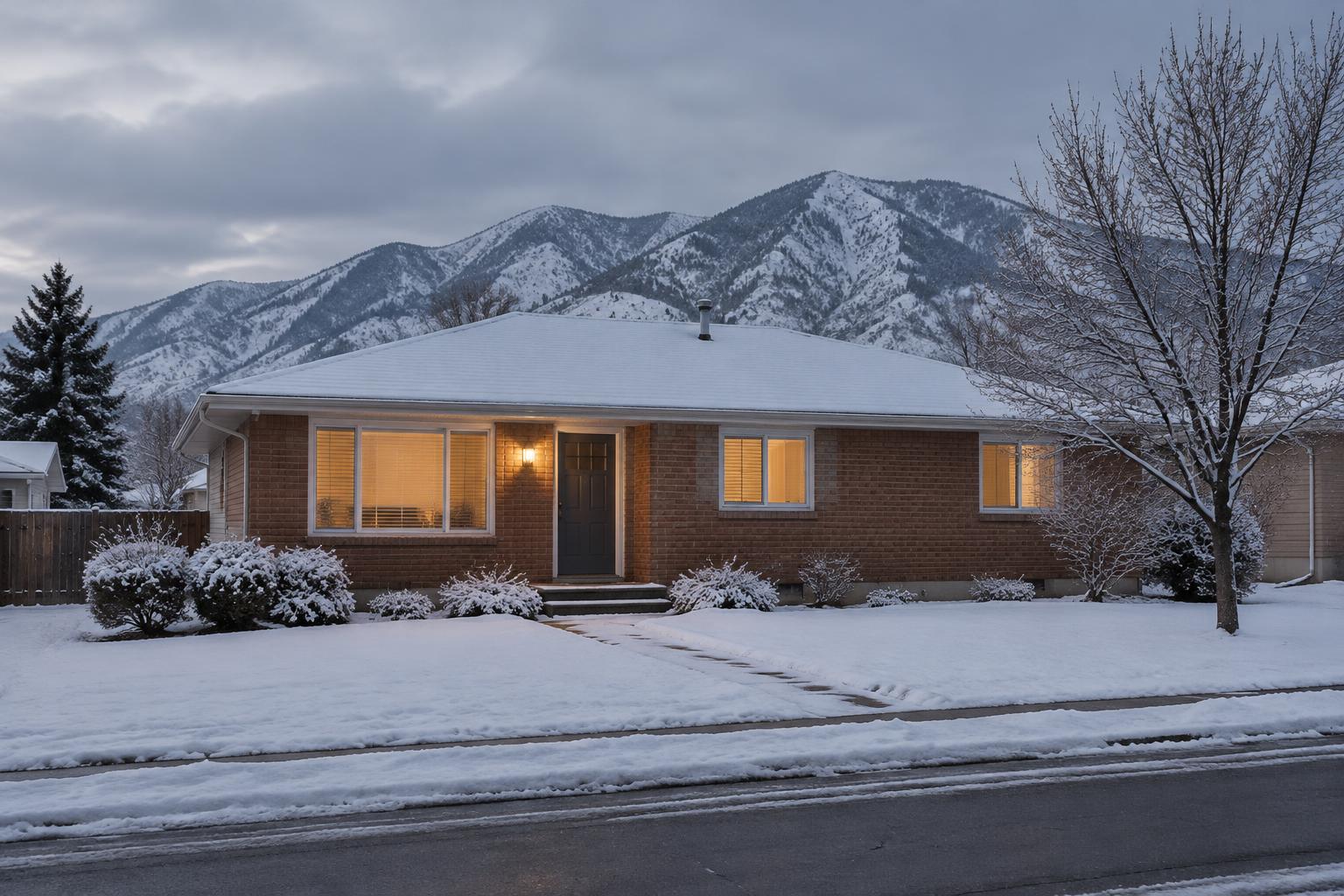
There was no month where homes sold below their estimated value on average. Spring is stronger — but homes sell in all of them.
1. What the numbers actually say about winter sales
The most thorough look at this question I’ve found comes from ATTOM, a property data company. In their 2026 analysis of more than 52 million home sales spanning 2015 through 2025, they compared sale prices to estimated market values month by month.
Here’s what they found:
- Seller premiums peaked in spring — March at 10.7%, with May and April close behind at 10.2%.
- Premiums tapered through the second half of the year, with October (7.9%) and September (8.0%) at the bottom.
- Homes still sold above estimated value in every single month of the year.
Read that last line again, because it’s the part most people miss. There was no month where homes sold below their estimated value on average. The difference between the best month and the worst month was a few percentage points — real money, but not the difference between selling and not selling.
One important caveat: these are national figures across a decade of sales, not a Utah-specific measurement and not a prediction for your street. Our market in Juab County and Utah County has its own rhythm, and a small market like ours can swing on just a handful of sales.
But the pattern holds up year after year: spring is the strongest season, fall and winter are quieter, and homes sell in all of them.
Nobody trudges through slush to look at your house on a Tuesday night in January for fun. Winter buyers are serious.
2. The trade-offs are real — in both directions
Here’s what actually changes when you list in winter.
There are fewer buyers. That part of the conventional wisdom is true. Families don’t love moving mid-school-year, and nobody wants to haul boxes through a snowstorm if they can avoid it. Showings slow down.
But the buyers who remain are serious. Nobody trudges through slush to look at your house on a Tuesday night in January for fun. Winter buyers usually have a reason — a job, a lease ending, a baby coming, a divorce, a parent moving in. Motivated buyers make decisions.
There’s less competition. This is the part sellers underestimate. In spring, your home is one of many new listings hitting the market the same week. In winter, the pickier buyers have fewer choices. If your home is the cleanest, warmest, best-priced option in its range, it stands out more in January than it ever will in May.
The season cuts both ways on price. The ATTOM data suggests spring sellers capture a somewhat higher premium on average. But waiting has a cost too — several more months of mortgage payments, insurance, taxes, utilities, and upkeep while you hold the property. If waiting costs you $2,000 a month in carrying costs, a slightly better spring price may not actually put more money in your pocket.
That math is worth doing for your specific house. I built a seller net sheet calculator for exactly this — plug in your payoff, your likely price, and your costs, and see what you’d actually keep under different scenarios.
3. What a Utah winter does to your showing
Selling in winter here isn’t like selling in winter in Phoenix. Snow, short days, and cold change how your home presents, and some of it is manageable if you plan for it.
Daylight is your scarcest resource. By 5 p.m. it’s dark. That means most working buyers will see your home after sunset. Good exterior lighting matters more in December than it ever does in July. Turn every light on for showings — inside and out.
Snow hides your landscaping and shows your maintenance. Buyers can’t see the lawn, but they can absolutely see whether you shoveled the walk. A cleared driveway and a salted path tell a buyer the home is cared for. An icy sheet to the front door tells them the opposite.
Cold is an inspection you didn’t schedule. A winter buyer will notice a cold house instantly, and they’ll wonder about the furnace. If your heating system is older, get it serviced before you list — a tune-up is cheap, and a receipt from a recent service answers a question before it’s asked. Matt Ott from Mammoth Heating & Air walked me through what a good furnace tune-up should include, and it’s worth a read before your first showing.
Photos matter even more. If at all possible, get your listing photos done on a clear day — or use photos from before the snow if your agent has them. A home photographed in gray slush looks tired. The same home in soft winter light with snow on the mountains can look like a postcard.
The mistake isn’t selling in winter. It’s drifting — not listing, not preparing, just waiting because waiting feels easier.
4. When waiting for spring makes sense — and when it doesn’t
I won’t tell you winter is always the right time. Sometimes it isn’t.
Waiting often makes sense if your home’s main appeal is the yard, the views, or the land — things snow genuinely hides. It can also make sense if you need the next few months to finish repairs, or if your move is flexible and you’d simply rather shop for your next place when there’s more to choose from.
Selling now often makes sense if you’ve already bought or are moving for a job and the house would sit empty. An empty home in a Utah winter carries real risk — frozen pipes don’t care about your timing. It also makes sense if your carrying costs are high, or if your home shows well regardless of season: warm, bright, clean, and priced right.
The mistake I see isn’t selling in winter. It’s drifting — not listing, not preparing, just waiting because waiting feels easier. If you’re going to wait for spring, use the winter on purpose: declutter, handle the repairs, talk to a lender about your next purchase, and get a pricing opinion so you know your number before the spring rush.
5. If you do list this winter
A few things I’d tell any seller listing between now and March:
- Price it right from day one. Winter buyers are serious, but they’re not desperate, and an overpriced home in January just sits while the serious buyers pass it by.
- Make it easy to see. Flexible showing times matter when daylight is short. The harder your home is to tour, the fewer offers you’ll get.
- Keep it warm and bright. Every light on, heat up, walk cleared. You’re selling the feeling of coming in out of the cold.
- Have your paperwork ready. Serious winter buyers move fast. Disclosures, utility averages, and service records should be ready before the first showing.
So — do houses sell in the winter? Yes. Fewer of them, to more motivated buyers, with less competition on the shelf next to you. Whether that’s the right move for your house depends on your numbers, your timeline, and your next step.
If you’re on the fence, run your numbers in the calculators, and then let’s talk it through. I’ll give you an honest read on what your home would likely do this winter versus this spring — even if the honest answer is “wait.”
List now or wait for spring? Let’s run your numbers.
Ask me about selling this winterPrefer to call or text? (603) 915-6884
This article gives you a starting point, not a price opinion, appraisal, or professional advice. National statistics don’t predict what any one home will do, and every sale depends on the property, the price, and the moment. Reach out to me for an honest look at your specific situation.
Share this post
Related posts
Keep reading
Selling
Can I Sell My Home Without a Realtor?
Yes, you can. But before you skip the agent, here's the work you take on, what an offer is really worth, and whether the savings actually stay in your pocket.
Read
Selling
Is Your Home Overpriced? Buyers Will Tell You
Your list price is a strategy. Buyer behavior — clicks, showings, second showings, and offers — is the feedback that tells you whether that strategy is working. Here's how to read the signals.
Read
Resources
Repair or Replace? Don’t Make a $10,000–$20,000 Decision Without Asking Questions
My conversation with Matt Ott of Mammoth Heating & Air: repair versus replacement, second opinions, duct cleaning, Utah elevation, and what a furnace tune-up should include.
Read