Buyer Education · Nephi · Juab County · Utah
How Much Do You Actually Need for a Down Payment in Utah?
Most first-time buyers think they need 20% down before they can buy a home. That is not always true.
Depending on the buyer, the loan program, the property, and the lender, down payment options may range from 0% to 20%.
But the down payment is only one part of the decision. Buyers also need to understand closing costs, cash reserves, monthly payment, mortgage insurance, property taxes, insurance, repairs, and whether the home actually fits their life.
For buyers looking in Nephi, Mona, Salem, Juab County, or the Spanish Fork-to-Nephi corridor, the right down payment strategy can affect more than the loan. It can affect how strong your offer looks and how much cash you still have after closing.
Loan programs, eligibility, credit requirements, income limits, property eligibility, and mortgage insurance rules vary by lender and can change. This article is for general education only. Buyers should confirm details with a licensed lender.
Section One
The answer is not always 20%.
20% down can be helpful, but it is not the only path to buying a home. Here is what a few common options look like on a $450,000 home.
0%
$0
If eligible (VA / USDA)
3%
$13,500
Conventional, qualified buyers
3.5%
$15,750
FHA, qualified buyers
5%
$22,500
Conventional middle ground
10%
$45,000
Stronger offer position
20%
$90,000
Avoids PMI on conventional
Closing costs are separate from the down payment. The down payment is rarely the only cash a buyer needs at the table.
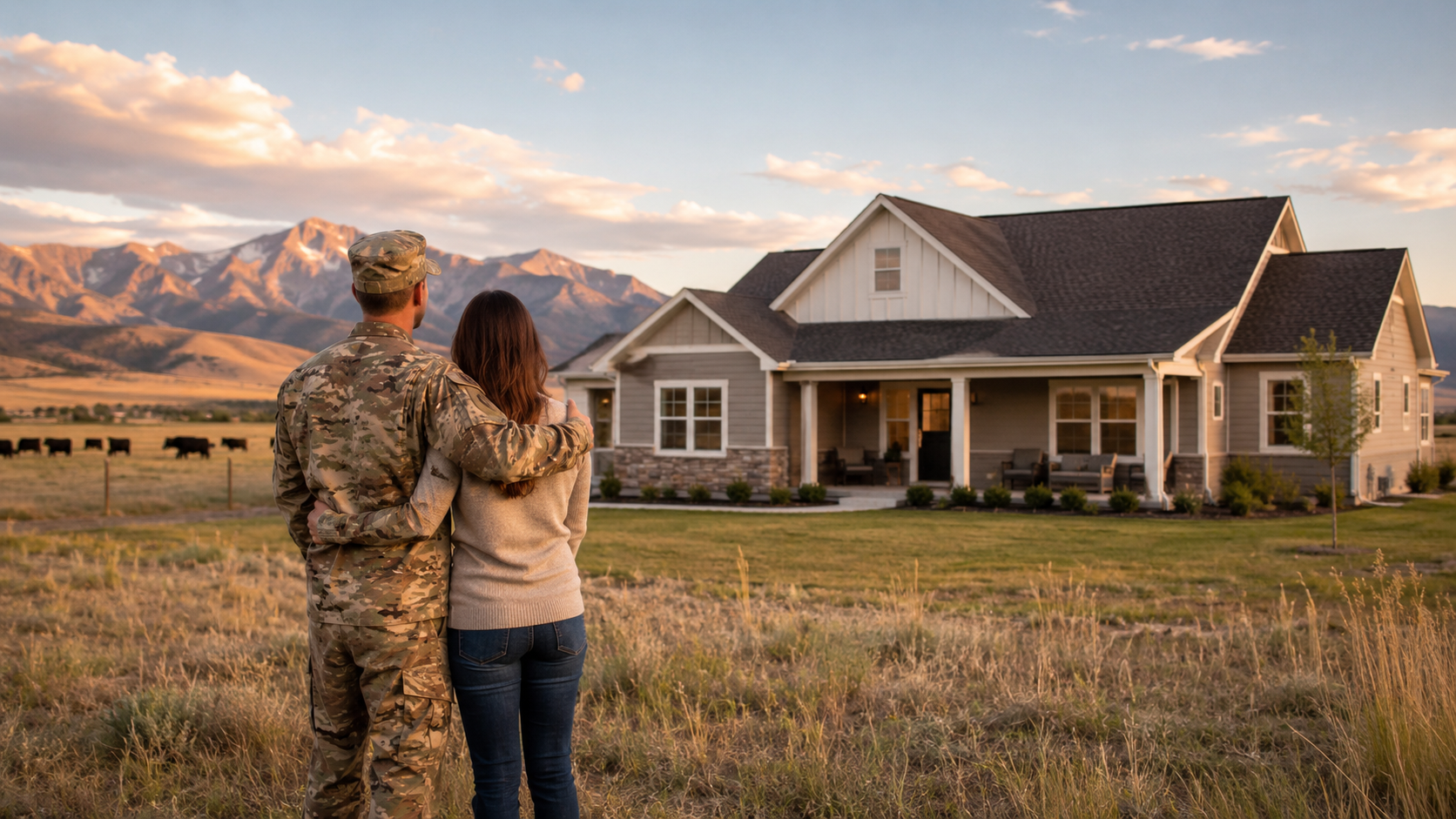
VA · USDA · 0% down for eligible buyers
Section Two
0% down: VA and USDA loans.
VA loan
A VA loan may allow eligible veterans, active-duty service members, and some surviving spouses to buy with no down payment and no private mortgage insurance.
- Eligibility is required.
- Buyer still needs to qualify for income, credit, and loan approval.
- The property still needs to meet lender and VA requirements.
- VA loans may have a funding fee unless the borrower is exempt.
USDA loan
A USDA loan may allow eligible buyers to purchase with no down payment in eligible rural areas.
- Property location must qualify.
- Buyer income limits apply.
- The home must meet USDA and lender requirements.
- Parts of rural Utah, including some areas around Juab County, may be worth checking.
Section Three
3% and 3.5% down: common first-time buyer options.
Conventional 3% down
Some conventional loan programs may allow qualified first-time buyers to purchase with as little as 3% down.
- Good credit is usually important.
- PMI typically applies below 20% equity.
- Requirements vary by lender and loan program.
FHA 3.5% down
FHA loans are government-backed and may allow buyers to purchase with 3.5% down if they meet the program requirements.
- FHA can be popular with first-time buyers.
- Flexible credit guidelines may help some buyers.
- A mortgage insurance premium applies.
- Property and borrower must qualify.
On a $450,000 home
3% down = $13,500
3.5% down = $15,750

First-time buyers · running the numbers
Section Four
5%–10% down: a strong middle ground.
Some buyers choose 5% to 10% down because it can improve their monthly payment and strengthen their offer without requiring a full 20% down.
- More down can lower the monthly payment.
- More down may reduce interest paid over time.
- PMI may still apply until 20% equity.
- A larger down payment can make an offer look stronger.
- Buyers should not put every dollar into the down payment. Cash reserves matter after closing.
On a $450,000 home
5% down = $22,500
10% down = $45,000

"Do not drain every dollar just to increase your down payment."
Section Five
20% down: helpful, but not always required.
20% down can be a strong option if the buyer has the money, but waiting for 20% is not always the right move.
- 20% down can eliminate PMI on a conventional loan.
- It may help with loan terms.
- It lowers the loan amount.
- It requires a lot of cash. On a $450,000 home, 20% down is $90,000.
- Some buyers wait so long to save 20% that prices, rent, or life circumstances move faster than their savings.
Section Six
What actually changes when you put more down?
Lower down payment
- Less cash needed at closing
- More cash left in reserves
- PMI or mortgage insurance may apply
- Higher monthly payment
- More interest paid over time
- May be less competitive in some offer situations
Higher down payment
- Lower monthly payment
- Less interest paid over time
- PMI may be eliminated at 20% on conventional loans
- Stronger offer position
- Lower loan amount
- Less cash left after closing
Down payment requirements vary by lender, loan program, credit profile, income, property type, and current guidelines. General education only — not financial advice.
Section Seven
The down payment is not the whole cost.
A buyer should not only ask, "How much do I need down?" They should also ask:
- What is my full monthly payment?
- What are my closing costs?
- Will I have PMI, MIP, or another form of mortgage insurance?
- How much cash will I have left after closing?
- What repairs or maintenance could come up after move-in?
- Does this payment still let me live my life?
Buying in Nephi, Mona, Salem, Juab County, or Central Utah should not feel like guesswork. The right plan looks at the full picture, not just the listing price.
Section Eight
A simple three-step plan.
01
Know your real budget
Before you start touring homes, know your monthly payment comfort zone, estimated closing costs, and how much cash you want left after closing.
02
Talk to a lender
A lender can tell you which programs you may qualify for, what your down payment options look like, and whether VA, USDA, FHA, or conventional financing makes the most sense.
03
Shop with a plan
Once you know the numbers, Dana can help you compare homes, understand the local market, and avoid chasing a house that does not fit your real life.
Section Nine
Local takeaway for Utah buyers.
The answer is not always 20%.
Some buyers may qualify for 0% down. Some may use 3% or 3.5%. Some may choose 5% to 10% because it gives them a stronger offer. Some buyers are best off putting 20% down if they can do it comfortably.
The important part is not picking the lowest number or the biggest number. The important part is knowing what each option does to your monthly payment, cash reserves, offer strength, and stress level after closing.
If you are trying to figure out what buying could look like in Nephi, Mona, Salem, Juab County, or the Spanish Fork-to-Nephi corridor, start with the numbers. Then build the home search around real life. The buyer resources page and the Nephi renter-to-homeowner guide are good places to keep going. And if the down-payment cash is tight, read can the seller pay your realtor's fee in Utah — asking the seller to cover buyer-agent compensation is one of the levers that can keep more cash in your pocket at closing.

Next step
Need help figuring out what fits your budget?
Use the Summit Keys calculator page to get a better idea of what your monthly payment could look like. Then connect with Dana to understand what that budget can realistically buy in Nephi, Mona, Salem, Juab County, or the Spanish Fork-to-Nephi corridor.
Frequently asked
Down payment FAQs for Utah buyers.
This article is for general educational purposes only and is not legal, tax, lending, or financial advice. Loan programs, down payment requirements, mortgage insurance, income limits, property eligibility, and lender guidelines can change. Buyers should confirm current options with a licensed mortgage lender. Dana Hoyt is a licensed Realtor® in the state of Utah with Summit Keys Real Estate. Information is subject to independent verification.
