
Woodland Hills, Utah
Elevated Mountain Living Above Utah Valley
Most communities in Utah County are defined by their proximity to the valley floor — the grid, the amenities, the density, the pace.
Woodland Hills is defined by its distance from all of it.
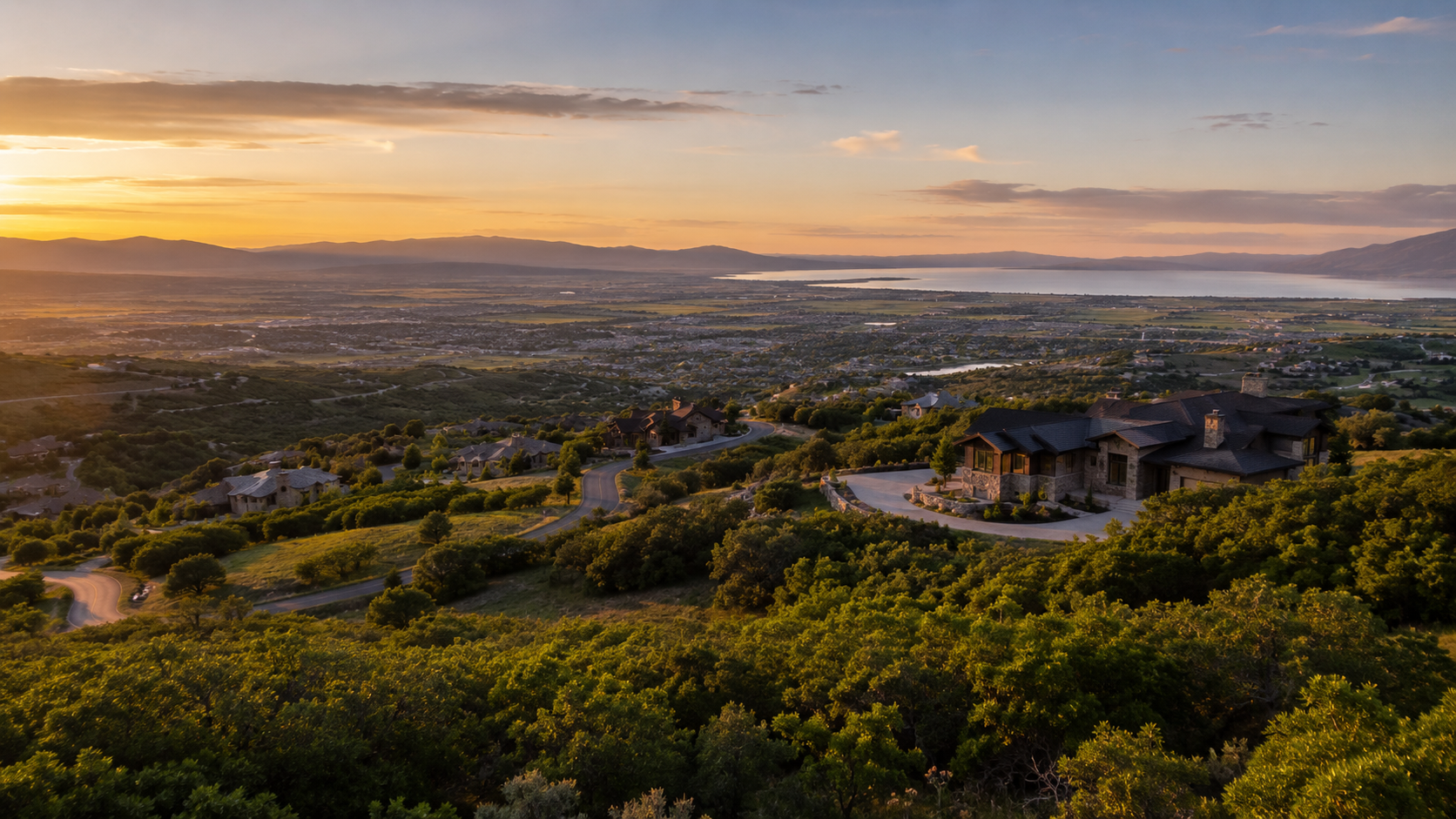
Tucked into the foothills of Mt. Loafer at the southern end of Utah County, Woodland Hills sits above the valley with panoramic views that extend across Utah Valley to Utah Lake. It has a population of fewer than 1,700 people, a homeownership rate of 92%, and no sidewalks — because this is not that kind of community. The roads are hills. The paths are trails through gamble oak and mature timber. The homes are custom and elevated, built for a landscape that commands attention.
This guide covers what Woodland Hills actually is, who it’s for, and what life here looks like on a daily basis.
Population, pricing, and market data referenced in this guide are sourced from publicly available sources and are subject to change. Verify current information before making decisions.
Section 01
A community with a sense of place.
Woodland Hills is a small incorporated city in southern Utah County with a 2026 population of approximately 1,653, growing at roughly 1.2% annually. It sits on the slopes of Mt. Loafer, elevated above the valley floor, with views that span Utah Valley and extend to Utah Lake. The community’s physical character is defined by the terrain — hillside roads that climb through mature trees, gamble oak, and natural vegetation that gives the area a distinctly wooded, mountain-estate quality unlike anything available at the valley floor.
The homeownership rate of 92.3% reflects an established community of people who chose this place deliberately and have remained. Median household income is approximately $151,964, and the median age is 41 years — an older, established demographic that shapes the quiet, private character of the neighborhood.
With only 389 occupied housing units, Woodland Hills is genuinely small — the kind of community where privacy is structural, not incidental.
“You don’t discover Woodland Hills by accident. You choose it.”
Section 02
The atmosphere.
The atmosphere in Woodland Hills is shaped by the landscape itself rather than by conventional suburban planning. There are no sidewalks — by design. Every road climbs, every path leads through natural vegetation, and the built environment consistently defers to the natural one. Mature trees line the hillside roads. Elevated homesites sit set back from the street. The overall character is one of refined privacy — the kind of quiet that requires elevation and distance from the valley floor to achieve.
The homes reflect this character as well. Custom architecture and distinctive design are the norm rather than the exception. Woodland Hills has no tract subdivisions in the conventional sense — the properties here were developed individually, on terrain that required that approach, and the result is a community of homes that are genuinely distinctive.
For buyers who have spent years looking at production homes in standard subdivisions, the visual and experiential difference is immediately apparent.
Section 03
The views.
The most immediately compelling feature of Woodland Hills for most visitors is what you can see from it. The city’s elevation on the Mt. Loafer foothills places most properties well above the valley floor, with unobstructed sightlines across Utah Valley toward Utah Lake and the mountains beyond. The view from the upper reaches of the community encompasses the entire Spanish Fork to Provo corridor below — a different way of understanding the region than the view from within it.
At sunset and dawn, the light on the valley below and the mountain ridgelines above creates a visual environment that residents consistently describe as one of the defining features of living here.
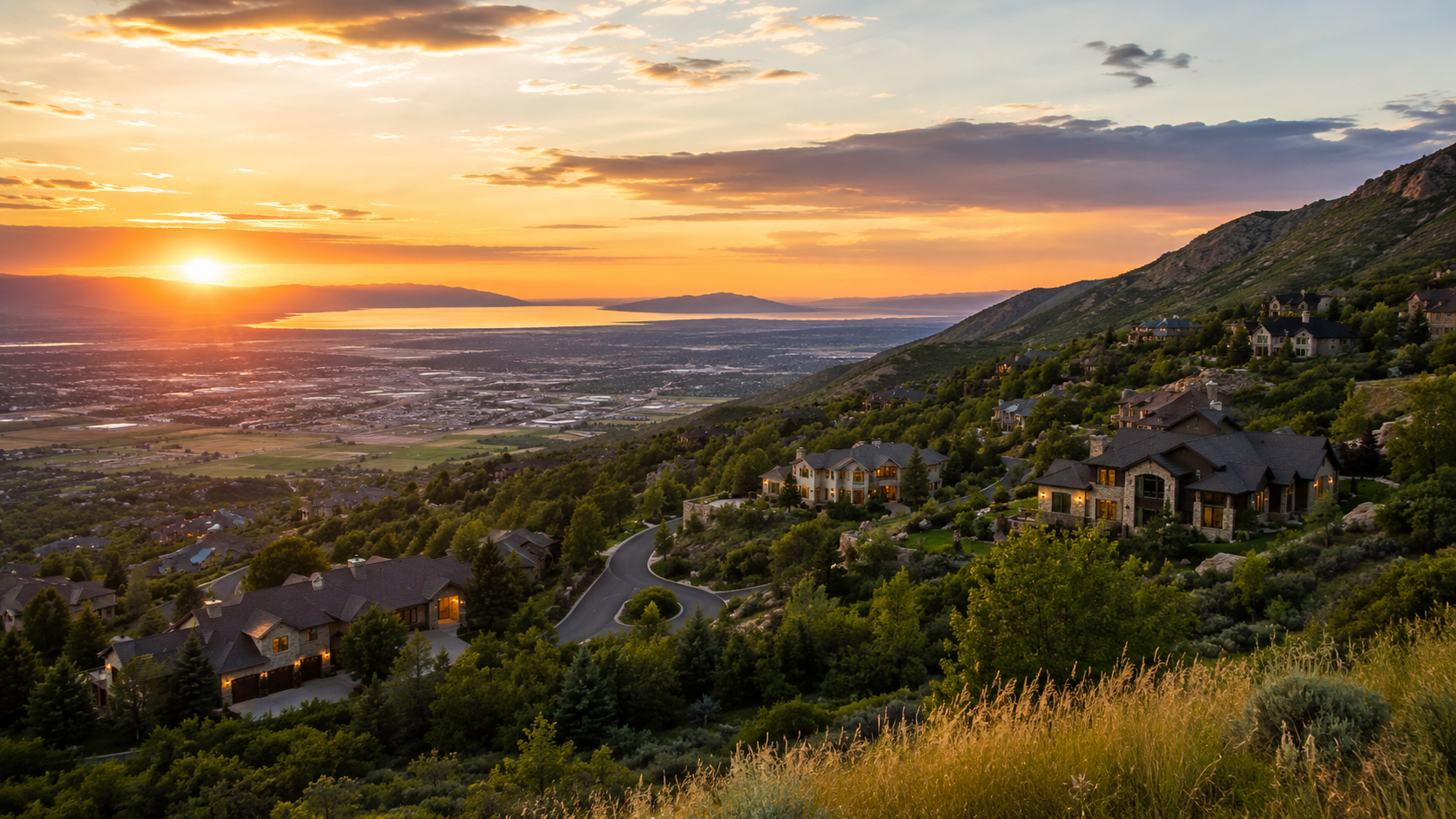
“The view below tells the story of where you’ve chosen not to live — and confirms exactly why you chose here instead.”
Section 04
What’s at your doorstep.
Trails and hillside walks
Woodland Hills residents have direct access to the hillside terrain from the neighborhood itself. Trails through gamble oak and natural vegetation, hill roads suitable for walking and cycling, and the physical character of the landscape create outdoor access that begins at the end of the driveway rather than requiring a drive to a trailhead.
Regional outdoor access
The Nebo Loop Scenic Byway connects Nephi and Payson via the mountains — one of the most celebrated scenic drives in Utah, with access points a short drive from Woodland Hills. Payson Lakes, a popular recreation area with fishing, picnicking, and mountain camping, is similarly accessible. Canyon drives, overlooks, and seasonal fall color are built into the regular rhythm of life here in a way that residents from denser Utah County communities often describe as the most unexpected benefit of making the move.
Services and daily life
Salem, Payson, and Spanish Fork are each within a short drive, providing grocery stores, medical facilities, and the full range of daily services without requiring Woodland Hills to provide them internally. This arrangement — elevated, private community that retains convenient access to the larger service infrastructure nearby — is precisely the balance the location was designed to offer.
Section 05
Why buyers choose Woodland Hills.
Most buyers who end up in Woodland Hills have been looking for a specific thing for a long time. They’ve toured production homes in standard subdivisions and found them adequate but not compelling. They’ve looked at other elevated communities and found them either too far from services or not quite right in character. Woodland Hills tends to be the place where the search ends — not because it’s perfect for everyone, but because for the right buyer, it is clearly the right answer.
The combination of custom architecture on elevated terrain, panoramic valley views, a private and established community character, and outdoor access that begins at the property line is genuinely rare in Utah County at any price point. Woodland Hills is not a compromise between lifestyle and convenience. For buyers who know what they’re looking for, it’s the resolution of that tension.
“Woodland Hills offers a more elevated side of Utah County — where quiet mornings, mountain air, and panoramic views create a lifestyle that feels both peaceful and distinguished.”
Section 06
Practical details.
- City
- Woodland Hills, Utah
- County
- Utah County
- 2026 Population
- ~1,653
- Homeownership Rate
- 92.3%
- Median Household Income
- ~$151,964
- Median Home Price
- ~$875,000+ (2026 — verify with MLS)
- Elevation
- Foothills of Mt. Loafer, above Utah Valley
- Character
- Custom homes, elevated lots, hillside roads, no sidewalks
- Nearby cities
- Salem, Payson, Spanish Fork — each a short drive
- Outdoor access
- Hillside trails, Nebo Loop, Payson Lakes, canyon drives
Market data, home prices, and availability change continuously. Contact Dana Hoyt directly for current listing information and market conditions in Woodland Hills.
Frequently asked
Woodland Hills, Utah FAQs.
Woodland Hills is a small city in southern Utah County, tucked into the foothills of Mt. Loafer. It is located near Salem, Payson, and Spanish Fork, and sits elevated above Utah Valley with panoramic views of the valley below.
Considering a move within Utah County? You may also want our Payson town guide, Spanish Fork corridor guide, or the Nebo Loop scenic byway piece — all in the same corner of the map. When you’re ready to see Woodland Hills in person, reach out .
Population, income, and pricing data referenced in this post are sourced from publicly available census, demographic, and market data and are subject to change. Home prices should be verified with current MLS data. No opinions about specific community groups, demographics, or protected classes are expressed or implied. This post is for general informational purposes only. Dana Hoyt is a licensed Realtor® in Utah with Summit Keys Real Estate and Real Brokerage, LLC The Perry Group.
