
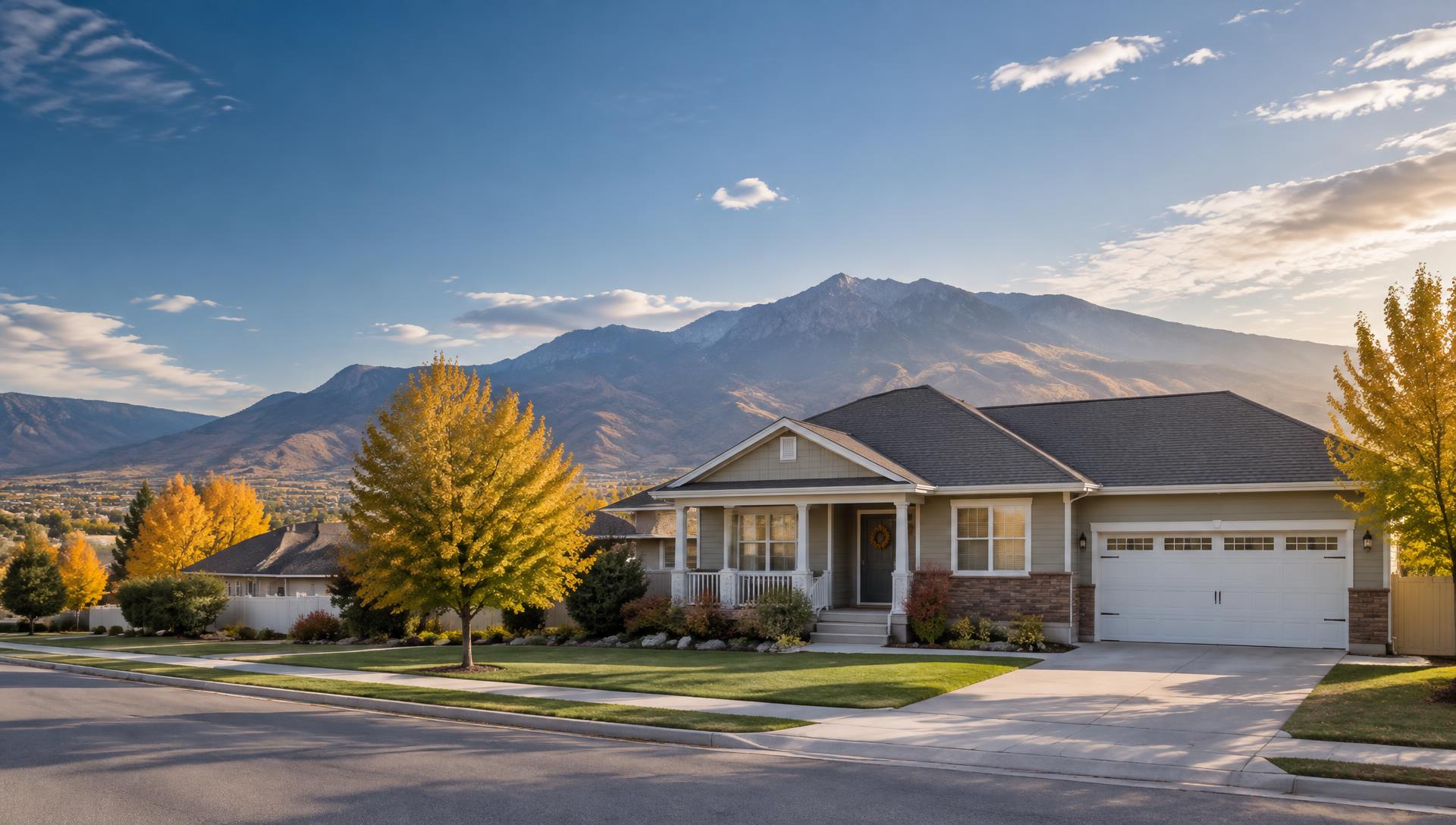
The buyer's perspective · Utah County & Juab County
Why buying a home in Utah now can make sense—even with rising rates.
The market looks uncertain. That does not mean you have to put your life on hold. Here's the honest case for buying when the numbers work—and the reasons I would tell you to wait.
10 min read Central UtahBy Dana Hoyt · September 26, 2026
The real question
It feels risky. I understand why.
If you've been watching rates rise and wondering whether buying now is a mistake, you're not being dramatic. A higher rate changes the monthly payment. A home is a big commitment. And nobody wants to discover they bought at the wrong moment.
But waiting is a decision too. You can wait for a cheaper loan, a cheaper house, a more secure job, or more savings. Those are different reasons, and they deserve different answers. My case for buying now is not “hurry before it's too late.” It's this: when you can comfortably own the right home, today's uncertainty can give you room to make a careful decision instead of fighting a crowd for it.
Freddie Mac reported a 7.03% national average for 30-year fixed loans for the week ending September 24, up from 6.95% the prior week. That's a dated national benchmark, not a Utah rate you can necessarily obtain. Your actual loan will depend on credit, down payment, program, lender and timing. And the affordability problem is real: the Kem C. Gardner Policy Institute reported a $520,000 statewide median sale price across housing types in the first quarter of 2026. That's historical statewide context, not a September asking price or a price for Nephi.
A quieter advantage
The opportunity may be in the conversation, not the interest rate.
In a frenzy, the buyer's question is often “How much over asking?” When a listing sits longer, the questions can change: What needs repair? Will the seller contribute toward closing costs? Is the price supported by comparable sales? Could a credit help with financing? None of that is automatic. A well-priced home in a sought-after part of Salem is not the same negotiation as a stale listing elsewhere.
But having time to inspect a property, read disclosures, compare homes and make a measured offer is valuable. Seller credits or builder incentives can sometimes help; whether a credit can be used, and how much, depends on the loan and contract. My conversation with lender TJ Shelley explains why the full cash-to-close figure matters more than a headline rate or down-payment percentage alone.
The best offer isn't always the biggest discount. Sometimes it's the right house, at a sustainable payment, with the risks understood.
The numbers in context
What would waiting have to save you?
Imagine a $450,000 home with 5% down, a 30-year fixed mortgage and no points or lender credits. At the September 24 national benchmark of 7.03%, the principal-and-interest payment works out to about $2,853 per month. Here's what happens if the same home is financed later at higher rates:
5% down · $427,500 loan · 30-year fixed · principal and interest only
7.03% · Sept. 24 benchmark
Reference point, not a Utah loan quote
8.00% · If rates rise
Same home, same down-payment percentage
9.00% · If rates rise further
An illustration, not a rate prediction
Rounded estimates, not financing offers. These payments exclude property taxes, homeowners insurance, mortgage insurance, HOA dues, utilities, repairs, closing costs and the cost of keeping a home. Rates may move in either direction; a real lender quote and a full monthly budget matter more than this chart.
Here's the other side of the equation. If rates moved to 8% and everything else stayed the same, a comparable home would have to sell for about $409,250—roughly $40,750 less than $450,000—to produce the same principal-and-interest payment with 5% down. At 9%, that equal-payment price is about $373,210. Those aren't price forecasts. They're just a way to measure the tradeoff.
And price can move the other way, too. If rates fall, your payment on a future purchase could improve, but competing buyers might return; how much, and whether prices change at all, cannot be known in advance. If home prices fall after you buy, your equity may shrink and you could lose money selling, even after years of ownership. A refinance might be possible if rates drop later, but approval, sufficient equity, credit, closing costs and timing all matter. Never buy a payment you can only afford after a hypothetical refinance.
Close to home
“Utah” is not one housing market.
Utah County and Juab County don't share one price point, one commute, or one set of compromises. A smaller place near work in Spanish Fork or Payson may be right for one family; more space farther south in Nephi or Mona may be right for another. A lower sticker price doesn't erase a longer drive, property upkeep or the cost of making a rural property work for you.
For a reality check on one place and one reporting window, see the 11 selected Nephi closings from August 3–September 24. They aren't every Nephi sale and can't tell you what an individual home is worth, but they show why size, condition and location matter. For the broader backdrop, read my September Utah market update. Use a local comparable-sale review for the property you're actually considering, not a statewide headline.
Buy with your eyes open
Six things I want in place before an offer.
First, a payment that works today. Ask for a lender's full estimate: principal, interest, taxes, insurance, mortgage insurance where applicable, HOA fees and cash to close. Your approval ceiling isn't your comfort zone.
Second, money left after closing. Moving expenses, repairs, a broken water heater and an unexpected job change don't wait until you've rebuilt savings.
Third, a property you understand. Compare recent nearby sales, look at condition and location, and use appropriate inspection and appraisal protections in the offer. A quick sale is never worth skipping the information you need.
Fourth, a realistic time horizon. If you may need to sell soon, transaction costs and a possible decline in value can make the math punishing. Staying longer gives a purchase more time to work, but it does not guarantee a profit.
Fifth, a plan for the uncomfortable scenario. Could you still make the payment if values slipped or refinancing wasn't available? Could you keep the house if your income changed?
Sixth, your own reason to move. A growing family, a new job or a home that fits your life is a better reason than a fear that someone else's prediction might come true.
When not to rush
Sometimes the best move is to wait—with a plan.
If your income is uncertain, you don't have reserves, the current payment would keep you up at night, or you expect to move again soon, I would not ask you to stretch just because I think rates may rise. The same goes for a home with serious condition problems or a price that the nearby sales don't support.
My personal view is that rates could move toward 8% or even 9% before they fall significantly. That's an opinion, not a prediction. The market may surprise all of us. A purchase still has to survive the numbers as they are today. If it doesn't, work with a lender on credit, savings, a different price range or a later timeline. For a closer look at the rate question, see should you wait for rates to drop?
Don't let the market decide your readiness. Let your numbers—and the right home—decide it.
Quick answers
Questions worth asking out loud.
What if mortgage rates keep rising?
A fixed-rate loan locks your agreed rate for the term, not future market rates. But you should compare the full cost of buying now with what you can afford and avoid assuming rates must rise.
What if Utah home prices fall after I buy?
Your equity could drop; selling in a downturn could mean a loss, especially after transaction costs. Buy for a payment and time horizon you can live with, not a promised appreciation rate.
Is buying automatically better than renting?
No. Renting can preserve flexibility and avoid ownership costs, particularly if you may move soon. Compare rent with the total cost of owning—not just principal and interest.
Can I just refinance if rates fall?
Possibly, but it isn't guaranteed. Refinancing depends on your credit, income, equity, available rates and costs. Make sure today's loan works without it.
Your next move
Let's test the idea against your real numbers.
Start at the buyer page, or tell me what you're considering. We can look at neighborhoods, comparable sales and the offer together, then bring in a lender for an actual payment and cash-to-close estimate. No need to pretend anyone knows next year's rate.
Sources and scope: Freddie Mac Primary Mortgage Market Survey, national weekly 30-year fixed average for September 24, 2026 (7.03%) and September 17, 2026 (6.95%); Kem C. Gardner Policy Institute, 2026 State of the State's Housing Market (Q1 2026 statewide median across housing types: $520,000). The latter is historical statewide context, not a September price or a local valuation. The Nephi example linked above covers only 11 selected closings. Rates, payments and equal-payment prices here are illustrative, not offers or forecasts. Freddie Mac rate archive · Gardner report summary .
Share this post
Keep reading
More for Utah homebuyers

Buying
You're Waiting for Rates to Drop — Here's What That's Quietly Costing You
Waiting for rates to drop before buying seems logical — until you factor in what happens to home prices when rates fall. Here's the honest math on waiting vs. buying now in Juab County, Utah.
Read
Market Update
What Is a Short Sale? A Plain-English Guide as Short Sales Rise in 2026
Short sales are up 16% in 2026 — but most buyers and sellers don't know what one actually is. Here's the plain-English explanation, the current data, and what buyers and sellers should know.
Read
Buying
Buying a Home in Utah? What Your Mortgage Lender Wants You to Know
A conversation with TJ Shelley of First Colony Mortgage: preapproval vs. prequalification, cash to close, credit, loan programs, advertised rates, builder incentives, and what to do before you start touring homes.
Read