
Owning · Utah County & Juab County
Utah homeowner tax breaksWhat you get, and what people miss
Owning a home in Utah comes with real tax breaks. A few of them only work if you fill out a form — and plenty of people never do.
By Dana Hoyt · October 29, 2026 · 8 min read
A client once told me, a few months after closing, “I thought the tax break just happened automatically.”
Some of them do. Some of them don’t. And the ones that don’t are where Utah homeowners quietly leave money on the table year after year.
So let’s walk through the tax breaks that come with owning a home in Utah — the state and county ones first, because that’s where most of the missed money hides, and then the federal ones that changed for 2026. I’ll finish with why I send nearly every client to a CPA.
Your Utah home is only taxed on 55% of its market value — if the county knows it’s your primary residence.
1. Utah’s version of a “homestead” break: the primary residential exemption
People who move here from other states often ask me about a homestead exemption. Utah doesn’t call it that, but we have something similar — and it’s generous.
Under Utah law, a home that’s used as someone’s primary residence gets a 45% exemption from its market value for property tax. In plain English: you’re taxed on only 55% of what the county says your home is worth. The exemption covers the home and up to one acre of land, according to the Utah State Tax Commission.
A quick example: if the county values your home at $400,000, your taxable value is about $220,000. Vacation homes and cabins don’t get this break, so the difference between “primary residence” and “second home” is real money.
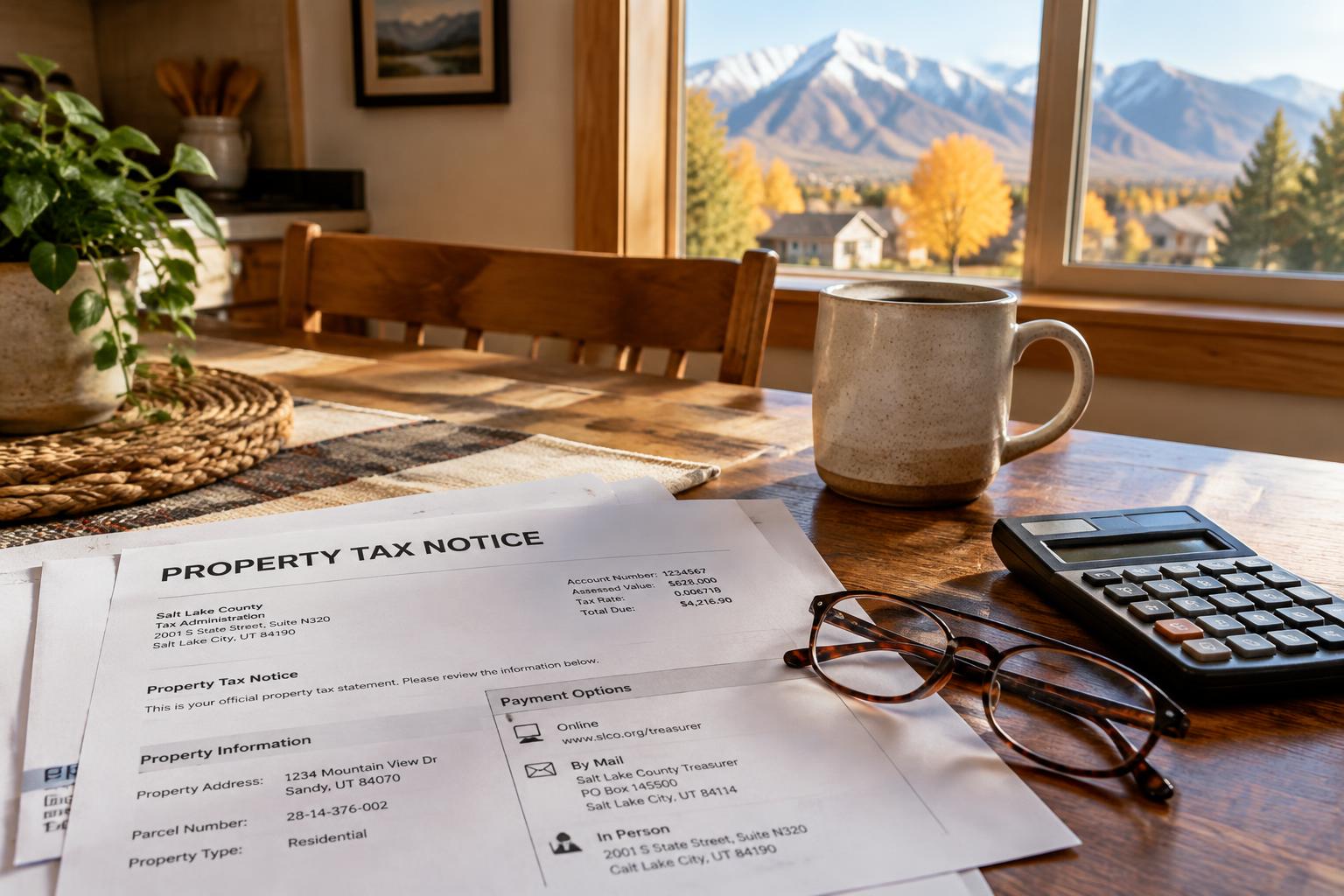
Here’s the part people miss. The exemption is usually applied automatically, but not always. The Tax Commission says that starting January 1, 2027, owners will need to file Form TC-473A with their county to receive or keep the exemption when ownership changes (including a deed, trust transfer, or name change), when the home didn’t qualify the year before, or when the county has reason to question it. Only one exemption is allowed per household in Utah.
What I tell clients:
- Look at your property tax notice when it arrives each summer. It should show your home as primary residential. If it doesn’t, call your county assessor right away.
- Just bought, refinanced into a trust, or added a name to the deed? Ask the county whether they need a form from you.
- Moved out and rented the home? Rentals to full-time tenants can still qualify, but the county may ask for a signed declaration or your lease.
The most expensive tax break is the one you qualified for and never applied for.
2. The property tax relief programs almost nobody applies for
This is the section I most want people to read, because these programs exist in every Utah county and many people who qualify never ask.
Utah counties run several property tax relief programs authorized by the state. Utah County, for example, lists help for:
- Seniors 65 and older with limited income (often called the circuit breaker or homeowner’s credit)
- People who are permanently disabled
- Households facing serious financial hardship (indigent abatement and tax deferral)
- Veterans with a service-connected disability, and certain surviving spouses
- Active-duty military deployed outside Utah for long stretches
- People who are blind
Three things trip people up:
- You have to apply. Except for the disabled veteran exemption, Utah County requires a new application every year.
- There’s a deadline. Utah County’s 2026 deadline was September 1. Juab County and others set their own dates, so check with your county.
- Timing matters when you move. The Tax Commission says you generally must own the home on January 1 for the senior credit and hardship programs, and the senior credit can’t be claimed in the year the home sells.
If you have a parent in their late 60s or 70s on a fixed income, this is a five-minute phone call to the county auditor that could lower their tax bill every year.
I can tell you the rules exist. A CPA can tell you which ones fit your return.
3. The federal tax breaks — and what changed for 2026
Federal rules changed with the 2025 federal tax law, so some of what you heard a few years ago is out of date. The big ones:
- Mortgage interest. You can deduct interest on up to $750,000 of mortgage debt on your main home and a second home if you itemize.
- State and local taxes (SALT). The cap on deducting property taxes plus state income taxes rose from $10,000 to $40,000 for most filers starting in 2025, with the higher limit shrinking for higher incomes.
- Mortgage insurance. The deduction for mortgage insurance premiums (PMI, and FHA/VA/USDA premiums) is scheduled to return starting with 2026 taxes, with income limits.
- Selling your home. If you’ve owned and lived in your home for two of the last five years, you can usually exclude up to $250,000 of profit from tax ($500,000 for married couples filing jointly).
- Energy credits ended. The federal credits for things like heat pumps, windows and home solar ended for work done after December 31, 2025. If someone is still pitching you a federal tax credit for solar in 2026, ask a tax pro before you sign.
The catch: most of these only help if you itemize. Many Utah households take the standard deduction instead, which means the mortgage interest deduction may not save them a dime. The higher SALT cap could change that math for some families this year — which is exactly the kind of thing a CPA can run for you.
4. Why I tell almost every client to talk with a CPA
I can tell you these rules exist. I can’t tell you how they land on your tax return. A CPA or enrolled tax preparer can:
- Tell you whether itemizing beats the standard deduction for you this year
- Help you keep the right records from your closing — the settlement statement, points you paid, and property taxes paid at closing
- Plan ahead if you’re thinking about renting your home, running a business out of it, or selling a home you’ve owned a long time
- Make sure you’re not mixing up a primary residence and a rental in a way that costs you
The best time to call one is before you buy, sell, or move a home into a trust — not in April. Bring your closing paperwork and your latest property tax notice.
And if you want to see how taxes and insurance change your monthly payment, try my home calculators or compare two homes side by side with the Compare Two Homes tool. Or just call me. I’m happy to walk you through what owning would really cost.
Want to know what owning would really cost you? Let’s talk.
Ask me a questionPrefer to call or text? (603) 915-6884
I’m a real estate agent, not a CPA, tax preparer or attorney. This article is general information, not tax or legal advice. Tax laws, income limits and deadlines change every year and every county handles applications a little differently, so confirm the details with your county and a tax professional before you act.
Share this post
Related posts
Keep reading

Buying
First Time Home Buyer Loans and Grants in Utah
Who Utah's homebuyer loans, grants, and local assistance programs help, who they exclude, and how to choose one that fits your life.
Read
Buying
Struggling With Where to Live? Why New Construction Homes Are Getting a Second Look in Utah
The home, neighborhood, and payment you want don’t always line up. Here’s how I compare builder incentives, finished costs, commutes, and family priorities — with calculators to help.
Read
Resources
Reverse Mortgages in Utah: Myths, Risks and How They Work
Who owns the home? What happens to the equity and the heirs? Dana Hoyt asks reverse mortgage professional Matt Harrison the questions Utah homeowners and their families actually want answered.
Read